Feed

Page 9 of 16

Microsoft researchers have revealed the 40 jobs most exposed to AI—and even teachers make the list

fortune.com

the jobs most exposed are ones that involve knowledge work—like people doing computer, math, or administrative work in an office, the researchers wrote. Sales jobs are also high on the list, since they often involve sharing and explaining information.

A degree won’t save you from AI’s jobs revolution. Many of the jobs with high chances of getting upended by AI soon, like political scientists, journalists, and management analysts, are all ones that typically require a four-year degree to land a job. And as the researchers point out, having a degree—which was once considered a surefire path to career advancement—is no longer a safeguard against the changing tides.

Link

If you're remote, ramble — Steph Ango

stephango.com

Ramblings channels let everyone share what’s on their mind without cluttering group channels. Think of them as personal journals or microblogs inside your team’s chat app, a lightweight way to add ambient social cohesion.

Link

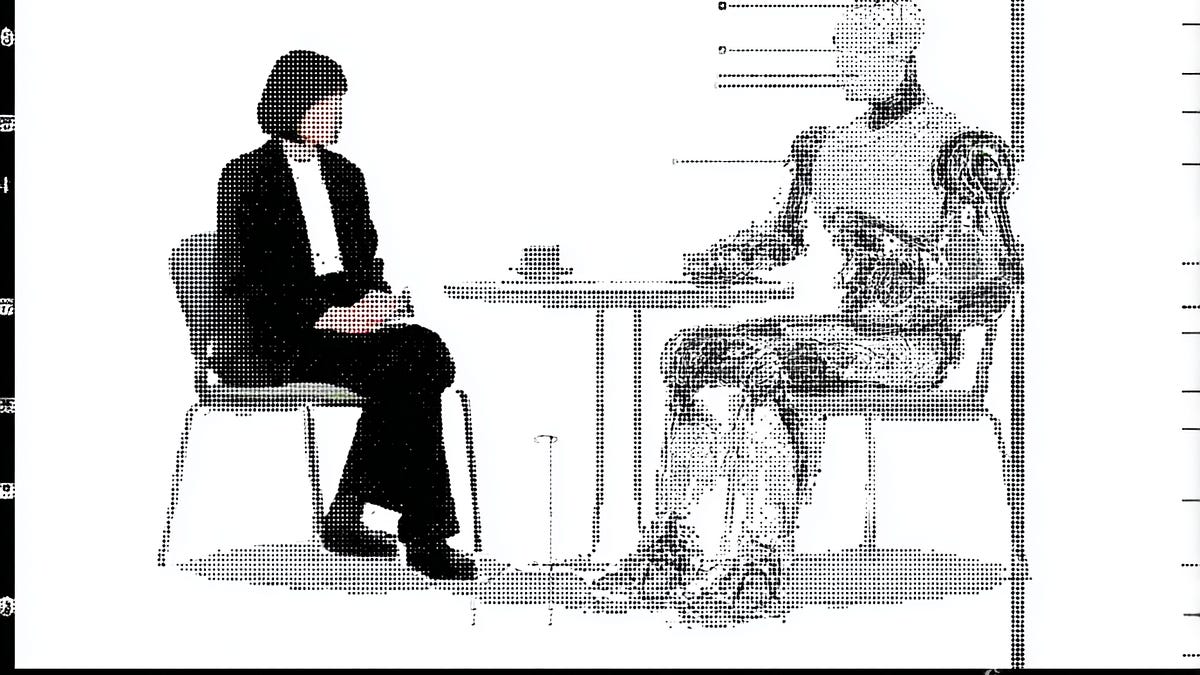
The Bitter Lesson versus The Garbage Can - by Ethan Mollick

www.oneusefulthing.org

The lesson is bitter because it means that our human understanding of problems built from a lifetime of experience is not that important in solving a problem with AI. Decades of researchers' careful work encoding human expertise was ultimately less effective than just throwing more computation at the problem. We are soon going to see whether the Bitter Lesson applies widely to the world of work.

The Bitter Lesson suggests we might soon ignore how companies produce outputs and focus only on the outputs themselves. Define what a good sales report or customer interaction looks like, then train AI to produce it. The AI will find its own paths through the organizational chaos; paths that might be more efficient, if more opaque, than the semi-official routes humans evolved. In a world where the Bitter Lesson holds, the despair of the CEO with his head on the table is misplaced. Instead of untangling every broken process, he just needs to define success and let AI navigate the mess. In fact, Bitter Lesson might actually be sweet: all those undocumented workflows and informal networks that pervade organizations might not matter. What matters is knowing good output when you see it.

Link

It's time for modern CSS to kill the SPA - Jono Alderson

www.jonoalderson.com

The reason SPAs became the default wasn’t because they were better. It was because, for a while, they were the only way to deliver something that felt fluid – something that didn’t flash white between pages or jank the scroll position.

But here’s the uncomfortable truth: most SPAs don’t actually deliver the polish they promise.

Link

Are We Trek Yet?

arewetrekyet.com

This guide is intended to be a comprehensive look at the tech that Star Trek suggested to drive humanity forward ad astra per aspera. The emphasis is on innovations that don't violate physics according to present consensus understanding. Go ahead and explore boldly, and if you have any corrections or additions, pop into the Are We Trek Yet channel on the Bingeclock Discord. Just don't waste too much time on idle speculation: there's a whole lot to do if we're going to get to Trek, and it's going to take all of us.li

Link

Conspiracy theorists don’t realize they’re on the fringe

arstechnica.com

Overconfidence is one of the most important core underlying components, because if you're overconfident, it stops you from really questioning whether the thing that you're seeing is right or wrong, and whether you might be wrong about it. You have an almost moral purity of complete confidence that the thing you believe is true. You cannot even imagine what it's like from somebody else's perspective. You couldn't imagine a world in which the things that you think are true could be false. Having overconfidence is that buffer that stops you from learning from other people. You end up not just going down the rabbit hole, you're doing laps down there.

Link

Rethinking CLI interfaces for AI — ⍻

www.notcheckmark.com

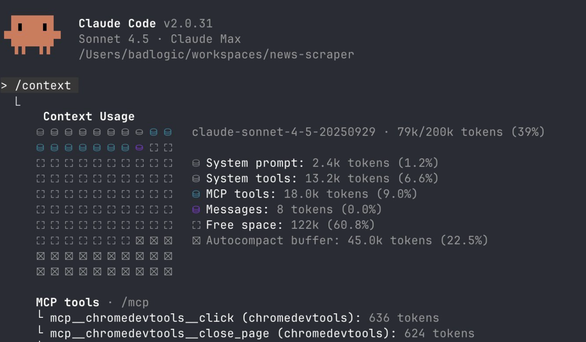
Basically every CLI tool can be improved in some way to provide extra context to LLMs. It will reduce tool calls and optimize context windows.

The agents may benefit from some training on tools available within their agents. This will certainly help with the majority of general CLI tools, there are bespoke tools that could benefit from adapting to LLMs.

It seems a bit silly to suggest, but perhaps we need a whole set of LLM-enhanced CLI tools or a custom LLM shell? The user experience (UX) field could even branch into AI experience and provide us a whole new information architecture.

Link

Page 9 of 16