Feed

Page 10 of 17

Erik Craddock
Erik Craddock@eriklink

Entering Technical Debt's ZIRP Era

Fear used to run the place. Fear of breaking the build, of untangling a stranger’s 4-year-old regex, of that ticket labeled ‘Small Fix’ that turns into a six-month expedition into the Mines of Legacy. But fear is just interest on the loan. And the rate is now zero.

It's like evolution. You don't design the perfect organism. You slop out millions of mutations and let selection sort it out. Except now selection happens in milliseconds and the mutations are guided by something that's read every programming book ever written.

Entering Technical Debt's ZIRP Era

worksonmymachine.ai

Entering Technical Debt's ZIRP Era

The manifesto for slop driven development

linkby Scott Wernervia worksonmymachine.ai
0 Replies0 Boosts0 Likes
Erik Craddock
Erik Craddock@eriklink

The Technium: An Audience of One

A large portion of these still images are preliminary: a sketch, a first draft, a doodle, a memo, a phrase, not meant to share. But even among those creations completed, very few are shared – because they were made for the pleasure of making them. You can generate an endless stream of beauty for the same reason you take a stroll through a garden, or hike into the mountains – in the hope you’ll catch a moment of beauty. You might try to share what you find, but it is not why you went. You went to co-create it. I think of a walk in a garden, or a hike in the high mountains – a hike that is not necessary for transportation reasons – as an act of co-creation. Together with nature, we are co-creating the moments of beauty we might find. Most of the beauty in the world is never seen by anyone. When we encounter these glimpses of a vista, or an exquisite way something is backlit, we are an audience of one. The joy is in discovering it; sharing is an afterthought.

An Audience of One

The Technium

An Audience of One

Today, AI tools lower the energetic costs of creating something. They make it easier to start and easier to finish. AIs can do a lot of the hard work needed in making something real. I find little joy in having … Continue reading →

linkby Kevin Kellyvia The Technium
0 Replies0 Boosts0 Likes
Erik Craddock
Erik Craddock@eriklink

Red meat allergy from tick bites is spreading both in US and globally

This delayed allergic reaction is called alpha-gal syndrome. While it’s commonly called the “red meat allergy,” that nickname is misleading, because alpha-gal syndrome can cause strong reactions to many products, beyond just red meat.

The syndrome is also rapidly spreading in the US and around the globe. The Centers for Disease Control and Prevention estimates as many as 450,000 people in the US may have it. And it’s carried by many more tick species than most people realize.

“Red meat allergy” from tick bites is spreading both in US and globally

Ars Technica

“Red meat allergy” from tick bites is spreading both in US and globally

Remember to check for ticks after your next stroll through the woods or long grasses.

linkvia Ars Technica
0 Replies0 Boosts0 Likes
Erik Craddock
Erik Craddock@eriklink

Initial Thoughts on GPT-OSS | Drew Breunig

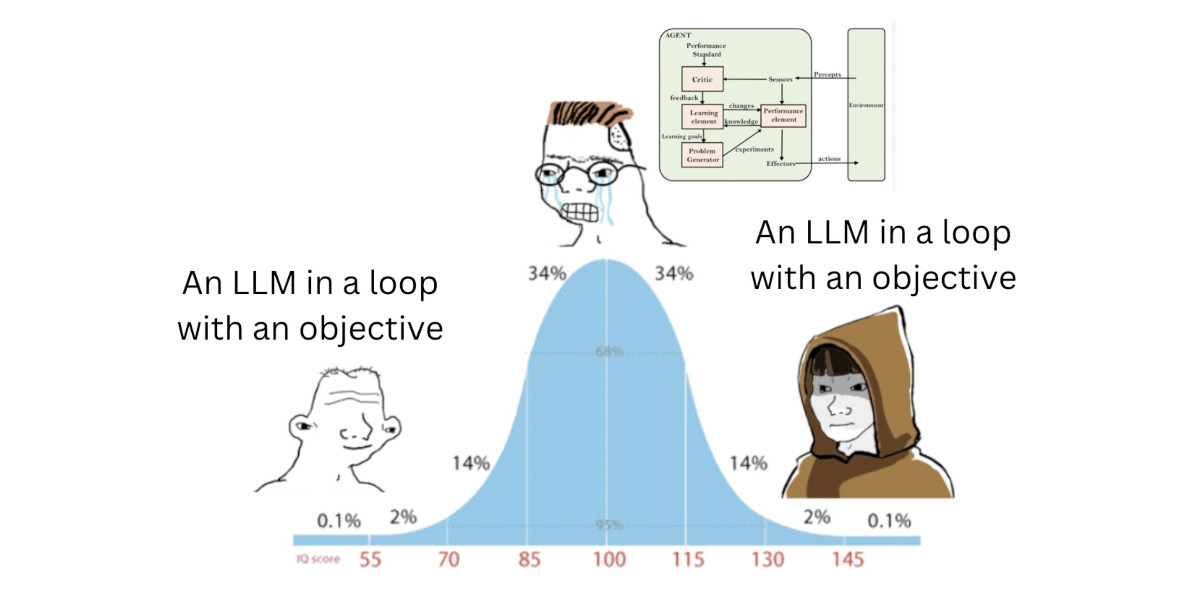
There’s two schools of thought when it comes to agent building.

Some people think you should shove your entire task into a giant model and let it sort it out, with plenty of thinking. It’s expensive, it’s slow, but it (allegedly) requires less upfront work.

Others think you should design your task, in composable steps, where you can measure the accuracy of each step. For most steps, you only need a small model! You don’t need o3 to churn through 3 minutes of tokens to summarize an email body or detect sentiment.

Initial Thoughts on GPT-OSS

Drew Breunig

Initial Thoughts on GPT-OSS

OpenAI released its open-weight model, gpt-oss, today. It comes in two sizes, 120B and 20B, the latter of which runs briskly on my Mac Studio. I’m sure I’ll have more impressions as I use it in anger over the next few weeks, but here’s my initial thoughts:

linkby Drew Breunigvia Drew Breunig
0 Replies0 Boosts0 Likes
Erik Craddock
Erik Craddock@eriklink

In Support Of Shitty Types | Armin Ronacher's Thoughts and Writings

As a shining example of types adding a lot of value we have Go. Go’s types are much less expressive and very structural. Things conform to interfaces purely by having certain methods. The LLM does not need to understand much to comprehend that. Also, the types that Go has are rather strictly enforced. If they are wrong, it won’t compile. Because Go has a much simpler type system that doesn’t support complicated constructs, it works much better—both for LLMs to understand the code they produce and for the LLM to understand real-world libraries you might give to an LLM.

In Support Of Shitty Types

Armin Ronacher

In Support Of Shitty Types

A curious thing about types and agents

linkby Armin Ronachervia Armin Ronacher
0 Replies0 Boosts0 Likes
Erik Craddock
Erik Craddock@eriklink

Developers, Reinvented – Thomas Dohmke

When we asked developers about the prospect of AI writing 90% of their code, they replied favorably. Half of them believe a 90% AI-written code scenario is not only feasible but likely within 5 years, while half of them expect it within 2 years. But, crucially, to them this future scenario did not feel like their value or identity is diminished, but that it is reinvented. Having experienced the skill and effort that goes into effectively managing the work of agents, it was now clear to them this will be the value-add activity, rather than leading implementation. “Maybe we become less code producers and more code enablers. My next title might be Creative Director of Code.”, one participant concluded.

Developers, Reinvented – Thomas Dohmke

ashtom.github.io

Developers, Reinvented – Thomas Dohmke

What started as fear of AI replacing developers is switching to pragmatically embracing the ambitious reality of AI and viewing it as a growth opportunity. As we build the tools of tomorrow, we can usher developers through this reinvention of their role in ways that are intuitive, delightful, and cater to developers’ curiosity, keeping them fulfilled and happy during the transition. That makes us optimistic. Realistically.

linkvia ashtom.github.io
0 Replies0 Boosts0 Likes
Erik Craddock
Erik Craddock@eriklink

Microsoft researchers have revealed the 40 jobs most exposed to AI—and even teachers make the list

the jobs most exposed are ones that involve knowledge work—like people doing computer, math, or administrative work in an office, the researchers wrote. Sales jobs are also high on the list, since they often involve sharing and explaining information.

A degree won’t save you from AI’s jobs revolution. Many of the jobs with high chances of getting upended by AI soon, like political scientists, journalists, and management analysts, are all ones that typically require a four-year degree to land a job. And as the researchers point out, having a degree—which was once considered a surefire path to career advancement—is no longer a safeguard against the changing tides.

Microsoft researchers have revealed the 40 jobs most exposed to AI—and even teachers make the list | Fortune

Fortune

Microsoft researchers have revealed the 40 jobs most exposed to AI—and even teachers make the list | Fortune

Sorry, Gen Z: AI is coming for safe and secure teaching jobs, as well as grad roles.

linkby Preston Forevia Fortune
0 Replies0 Boosts0 Likes
Erik Craddock
Erik Craddock@eriklink

The Bitter Lesson versus The Garbage Can - by Ethan Mollick

The lesson is bitter because it means that our human understanding of problems built from a lifetime of experience is not that important in solving a problem with AI. Decades of researchers' careful work encoding human expertise was ultimately less effective than just throwing more computation at the problem. We are soon going to see whether the Bitter Lesson applies widely to the world of work.

The Bitter Lesson suggests we might soon ignore how companies produce outputs and focus only on the outputs themselves. Define what a good sales report or customer interaction looks like, then train AI to produce it. The AI will find its own paths through the organizational chaos; paths that might be more efficient, if more opaque, than the semi-official routes humans evolved. In a world where the Bitter Lesson holds, the despair of the CEO with his head on the table is misplaced. Instead of untangling every broken process, he just needs to define success and let AI navigate the mess. In fact, Bitter Lesson might actually be sweet: all those undocumented workflows and informal networks that pervade organizations might not matter. What matters is knowing good output when you see it.

The Bitter Lesson versus The Garbage Can

oneusefulthing.org

The Bitter Lesson versus The Garbage Can

Does process matter? We are about to find out.

linkby Ethan Mollickvia One Useful Thing
0 Replies0 Boosts0 Likes

Page 10 of 17